Current Research
Our research broadly aims to understand how fire operates as a fundamental ecological process, combining field-based data collection with quantitative methods to inform fire and fuels management.
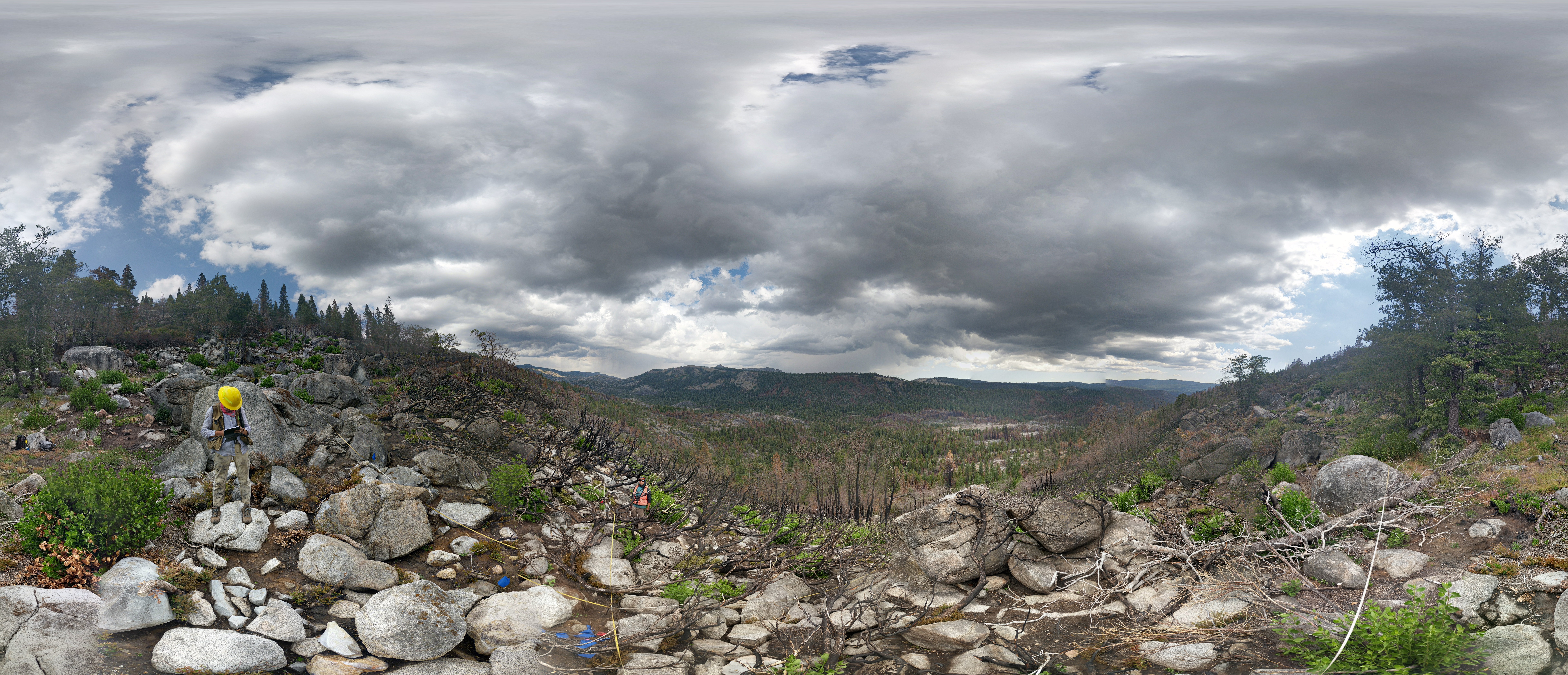
1. Fuel Treatment Monitoring
- Central Coast Fire & Fire Surrogate Monitoring
Prescribed and cultural fire research and monitoring focused on understudied ecosystems on the central coast of California, including chaparral and oak woodland, specifically aiming to measure wildfire risk reduction and ecological condition over time.
Partners: CAL FIRE, CA Department of Fish and Wildlife, Los Padres National Forest, TNC Dangermond Reserve
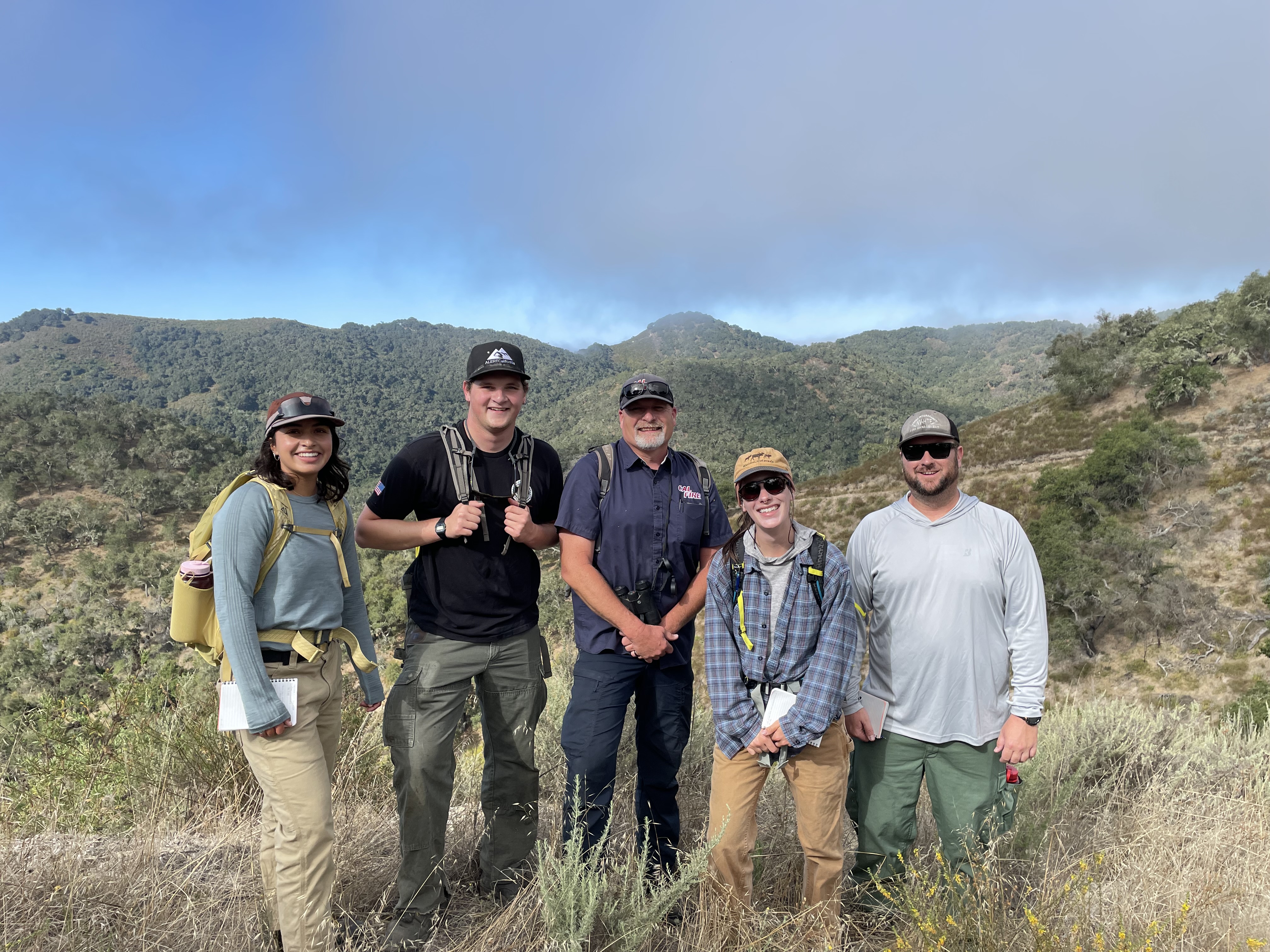
- Prescribed Fire Effects in Yellow Pine and Mixed Conifer Forests
Research examining the effects of prescribed fire on fuels, forest structure, and biodiversity across the Sierra Nevada bioregion as a part of the California Prescribed Fire Monitoring Program (CPFMP).
2. Post-fire Recovery
- Delayed Forest Reestablishment After High-Severity Wildfire
We will be assessing post-fire shrub carbon and forest regeneration across high-severity fire footprints in California, with the goal of understanding the extent to which delayed forest reestablishment impacts the benefits and costs of forest fuel reduction treatments.
Partners: UC Davis, FOCAL lab, and the California Air Resource Board
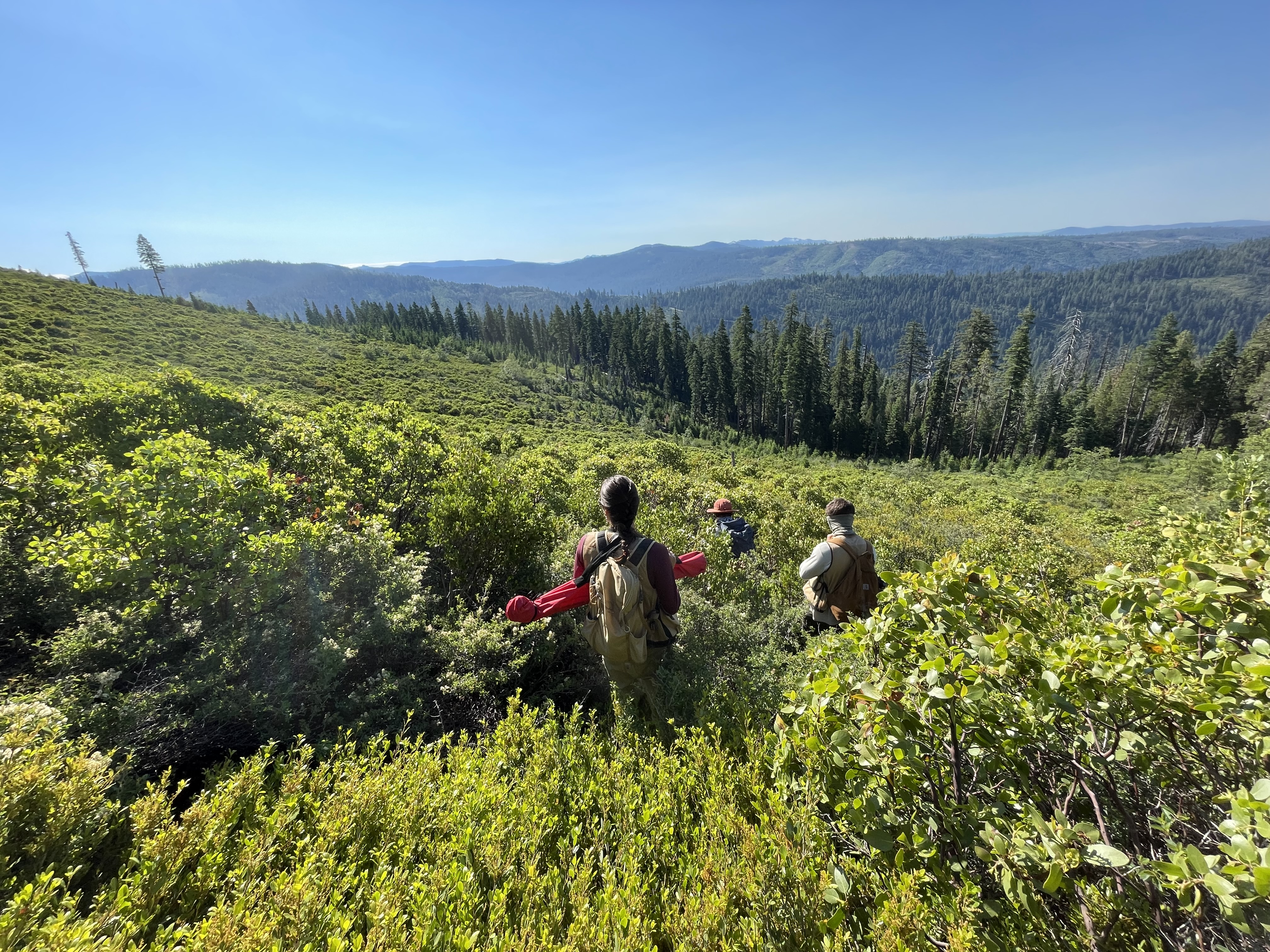
- Sagebrush (Artemisia tridentata) recovery & restoration
We are monitoring the recovery of Artemisia tridentata after high severity wildfire and conducting a field experiment to test how native seeding and cheatgrass removal influence natural regeneration.
Partners: Los Padres National Forest, Tree People
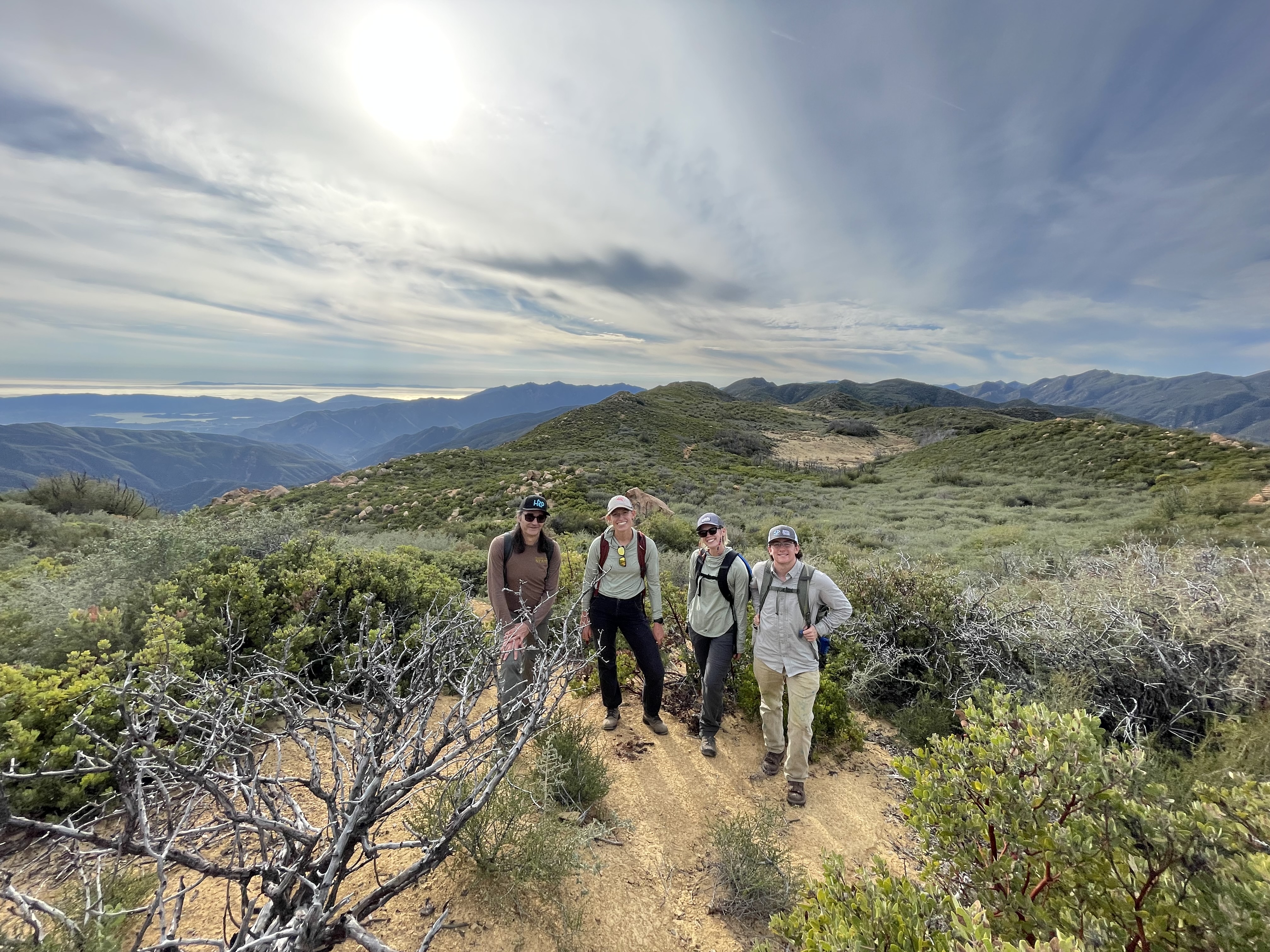
- Impact of Fire Frequency in Chaparral
Examining the impact of fire frequency on the composition and abundance of herbaceous and woody species in the Coast Range of northern California in order to understand future trajectories of chaparral-type conversion.